Fire Damage Restoration · California

Call Now: (555) 010-1234
☰ MenuOpen ▾

California Fire Damage Restoration · Odour removal after fire in California · Fire Damage Restoration in Long Beach · Call Now

Odour removal after fire in Long Beach

This is the one page for odour removal after fire in Long Beach, California. For odour removal after fire across all of California, use the parent subservice page. For the full fire damage restoration service in Long Beach, use the area page. This page does not repeat either of them in full — it covers this subservice, in this area, only.

  • Downtown Long Beach
  • Belmont Shore
  • Bixby Knolls
📞 Call Now: (555) 010-1234
✓ Priced before work starts✓ Coverage by ZIP — call to check

Local help

Odour removal after fire help for Long Beach

In Long Beach, odour removal after fire follows the same diagnosis-first approach as elsewhere in California, with the difference being local: access, property types, and conditions in Long Beach itself. Neighbourhoods covered on this page include Downtown Long Beach, Belmont Shore, Bixby Knolls. Coverage is by ZIP — if you are unsure whether help is available for your exact address in Long Beach, call and ask for your ZIP rather than assuming from this page alone.

Signs you need fire damage restoration

✓Soot or a smoke smell remains after a fire, even in rooms that did not burn.
✓Walls, ceilings, or contents are stained, warped, or smell of smoke.
✓Water damage is present from firefighting, sprinklers, or hoses.

How fire damage restoration works — in Long Beach

1

1. Assess and make safe

The building is assessed for structural safety, smoke spread, and water damage, and the affected areas are secured.

2

2. Remove debris and water

Debris and standing water are removed first, so drying and cleaning can start on a stable base.

3

3. Clean smoke and soot

Surfaces, contents, and air pathways are cleaned for soot and smoke residue, room by room.

4

4. Dry, repair, and finish

Wet materials are dried, damaged sections are repaired, and finishes are restored so the room looks and feels normal again.

Odour removal after fire work in Long Beach

Illustrative photo — odour removal after fire work in Long Beach, not a specific customer job

▶ Watch: odour removal after fire in Long Beach — illustrative video, not a specific customer job

Frequently asked questions

Can smoke damage be cleaned without replacing everything?⌄

Often, yes. Many hard surfaces and some contents can be cleaned. Porous materials that have absorbed heavy smoke are harder to save and may need replacement.

How long does fire restoration take?⌄

A small, contained fire can take days. A larger fire with structural work takes weeks. You should get a staged plan, not a single vague date.

Guides and blueprints

Fire Damage Restoration guides and blueprints — Odour removal after fire in Long Beach

The guides below cover odour removal after fire in Long Beach specifically: the blueprint for this subservice in this area, how to decide it is the right choice here, what to check before work starts, what moves its price, safety, and aftercare. For this subservice across all of California, use the parent subservice page; for the full service in Long Beach, use the area page.

01 · BLUEPRINTStep by step

Blueprint: fire damage restoration, step by step — Odour removal after fire in Long Beach

Fire damage is rarely only what the flames touched. Smoke travels, soot settles where you cannot see it, and water from firefighting damages floors and walls that never burned. Restoration therefore has to deal with fire, smoke, and water in the right order, and a blueprint that skips the drying or the smoke source will leave a building that looks restored but still smells, or still holds moisture.

  1. 1

    Step 1 — Do not re-enter the building until it has been declared safe, and do not turn on electrical systems or appliances that may have been damaged.

  2. 2

    Step 2 — Assess structural safety, smoke spread, and water damage, and secure the affected areas before any cleaning begins.

  3. 3

    Step 3 — Photograph damage for your records if it is safe to do so, and keep damaged items until you have been advised otherwise.

  4. 4

    Step 4 — Remove debris and standing water first, so drying and cleaning start on a stable base rather than on top of wet, damaged material.

  5. 5

    Step 5 — Clean smoke and soot room by room, including surfaces, contents, and air pathways, addressing the source of odour rather than masking it.

  6. 6

    Step 6 — Dry wet materials fully, repair damaged sections, and restore finishes so rooms look and feel normal again.

  7. 7

    Step 7 — Check the building room by room, confirm what was repaired, cleaned, or replaced, and keep itemised documentation for insurance.
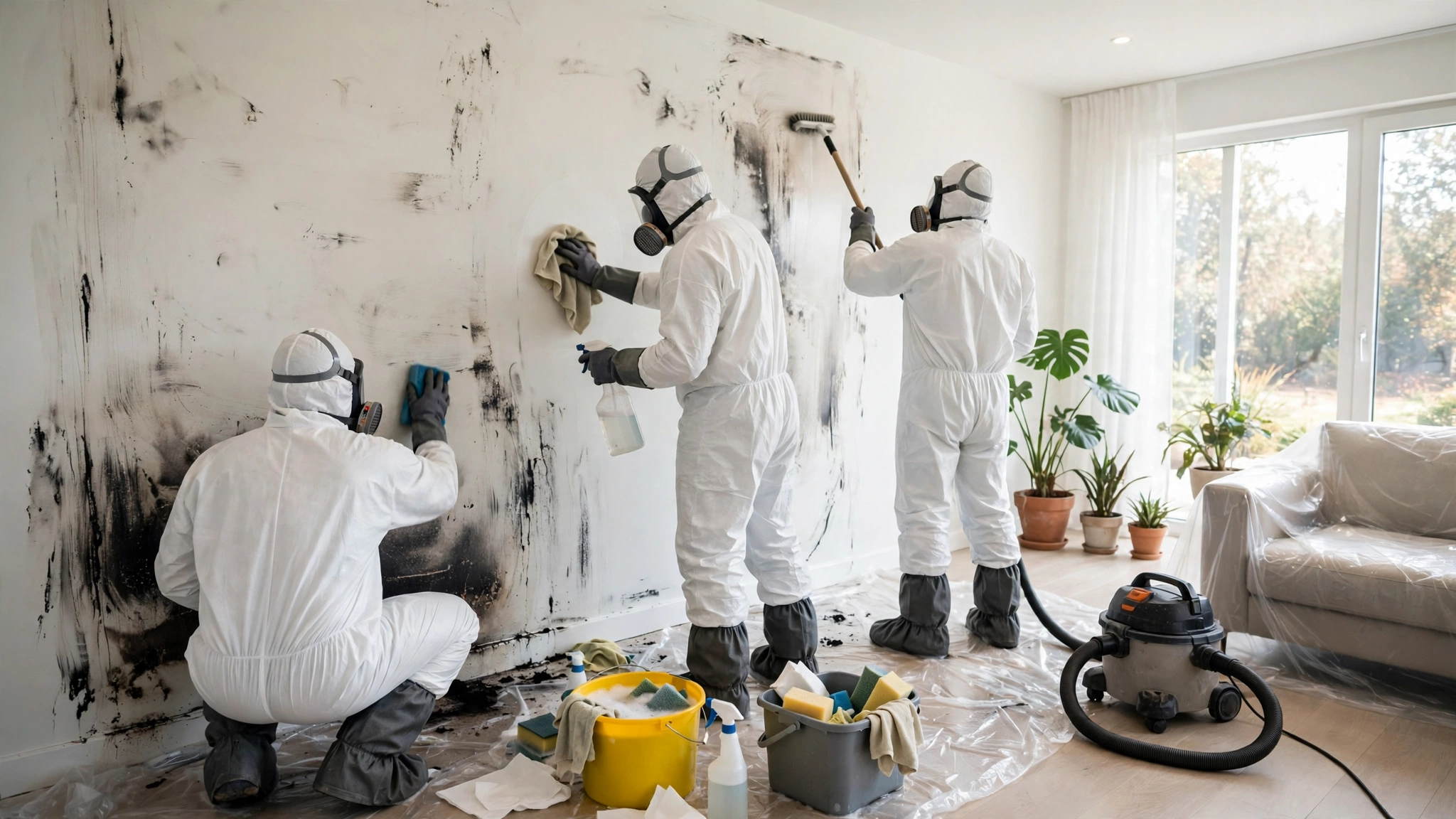
Blueprint: fire damage restoration, step by step — Fire Damage Restoration guide illustration
Illustrative photo — fire damage restoration work, not a specific customer job.
02

Guide: how to choose a restoration plan — Odour removal after fire in Long Beach

A fire restoration plan should be staged, not a single vague date. Ask for the stages in order — make safe, remove and dry, clean smoke and soot, repair and finish — and what each stage includes for your building. A small, contained fire can take days, while a larger fire with structural work takes weeks, and a staged plan makes that difference visible instead of hiding it behind one completion promise.

Ask how smoke odour will be handled, not just whether it will be handled. Surface cleaning alone often is not enough, because soot sits in surfaces, ducts, and soft materials, and odour work has to address that source rather than mask the smell. A crew that explains the source in your building, and what can and cannot be fully removed, is giving you a realistic plan.

Insurance documentation should be part of the plan from the start. Ask for a written scope and itemised documentation you can pass to your insurer, and keep damaged items until you have been advised otherwise. Photographs, lists, and staged scopes are not bureaucracy for its own sake; they are what allow a claim to be evidenced and a job to be checked.

Guide: how to choose a restoration plan — Fire Damage Restoration guide illustration
Illustrative photo — fire damage restoration work, not a specific customer job.
✓ Priced before work starts✓ Coverage by ZIP — call to check
03

Guide: what to do first after a fire — Odour removal after fire in Long Beach

The first rule after a fire is to wait for the building to be declared safe before re-entering, and to leave electrical systems and appliances alone if they may have been damaged. Heat and smoke can damage wiring and appliances in ways that are not visible, and switching them on to test them can create a new danger in a building that has already had one.

If it is safe to do so, photograph damage for your records and make a list of damaged items, but do not dispose of anything you may need to evidence. Keep damaged items until you have been advised, and do not try to clean soot with household products, because the wrong product can set staining permanently and make professional cleaning harder.

Once safety and records are handled, the call about restoration can focus on assessment and securing the building. Ask what will be assessed first, how the building will be secured, and what the staged plan looks like. Those answers, in writing, are the foundation for everything that follows.

Guide: what to do first after a fire — Fire Damage Restoration guide illustration
Illustrative photo — fire damage restoration work, not a specific customer job.
✓ Priced before work starts✓ Coverage by ZIP — call to check
04

Guide: common fire restoration mistakes to avoid — Odour removal after fire in Long Beach

The most common mistake is cleaning soot with household products before professional assessment. Soot is not ordinary dirt, and the wrong product, or the wrong technique, can drive staining deeper into a surface or set it permanently. Waiting for assessment, and keeping damaged items untouched, preserves both the surface and the insurance evidence.

A second mistake is treating odour as a surface problem. Spraying or masking a smoke smell without addressing soot in surfaces, ducts, and soft materials leaves the source in place, and the smell returns when the masking fades. Odour work that does not name its source is not a plan; it is a delay.

A third mistake is rushing to a single lump-sum price or a single completion date before assessment. Fire damage varies too much — flame, smoke, and water in different proportions — for a price or date given before assessment to be reliable. A staged scope, with each stage described, is slower to agree and far more accurate to deliver.

Guide: common fire restoration mistakes to avoid — Fire Damage Restoration guide illustration
Illustrative photo — fire damage restoration work, not a specific customer job.
✓ Priced before work starts✓ Coverage by ZIP — call to check
05

Guide: what moves the price, in detail — Odour removal after fire in Long Beach

Price moves first on how much of the building was affected, and by what. Flame damage, smoke spread, and water from firefighting are three different kinds of damage, and a building affected by all three is a different job from one affected by smoke alone. The scope should separate those three, so you can see what each part of the price is actually paying for.

Structural repair, drywall, and flooring replacement move the price second, followed by content cleaning or replacement. How much content can be cleaned, and how much must be replaced, depends on material, smoke exposure, and water exposure, and that assessment cannot be made honestly before the building has been assessed room by room.

Drying time, access, permits, and insurer coordination are the third factor. Wet materials take time to dry properly, and rushing drying to meet a date can leave moisture that causes problems later. A written, staged scope that includes drying, repair, and documentation is the only accurate price, and it should be agreed before work starts rather than assembled at the end.

Guide: what moves the price, in detail — Fire Damage Restoration guide illustration
Illustrative photo — fire damage restoration work, not a specific customer job.
✓ Priced before work starts✓ Coverage by ZIP — call to check
06

Guide: safety after a fire — Odour removal after fire in Long Beach

Safety after a fire is about what you cannot see as much as what you can. Structural damage, smoke in air pathways, and water in floors and walls can all remain after the visible fire damage has been cleared, and none of them should be tested by re-entering early or switching systems back on. Wait for the building to be declared safe, and follow the advice given about which rooms are usable and when.

Electrical safety deserves particular care. Systems and appliances exposed to heat or smoke may be damaged internally, and turning them on to see if they still work can be dangerous. Leave electrical checks to the assessment, and ask what was checked before any system is returned to use.

If smoke, water, or structural damage affects living areas, a temporary move is often necessary, and that decision should be made from the staged plan rather than from hope. Ask which rooms are safe, which are not, and what has to happen before each room can be used again, so the move, if needed, is planned rather than forced.

Guide: safety after a fire — Fire Damage Restoration guide illustration
Illustrative photo — fire damage restoration work, not a specific customer job.
✓ Priced before work starts✓ Coverage by ZIP — call to check
07

Guide: after restoration — checks and next steps — Odour removal after fire in Long Beach

Once restoration is complete, check each room against the staged scope, not against a general impression that the building looks better. Was smoke cleaning done in the rooms listed, were wet materials dried, were damaged sections repaired, and were finishes restored? Those are the checks that confirm the job, and they are best done room by room with the scope in hand.

Odour deserves a specific check in the days after handover. If smoke smell returns, or returns in particular rooms or through vents, report it early and describe where it is strongest, because that pattern points to its source. A return of odour is information, not a failure to complain about, and early reporting gives the crew a chance to address the source under the original plan.

Keep the full documentation together: the staged scope, the itemised record of what was repaired, cleaned, or replaced, photographs, and anything passed to your insurer. That file is useful if a further question arises about a room, if a warranty or insurance question follows, or if future work needs to know what was done underneath the finishes.

Guide: after restoration — checks and next steps — Fire Damage Restoration guide illustration
Illustrative photo — fire damage restoration work, not a specific customer job.
✓ Priced before work starts✓ Coverage by ZIP — call to check
08

Guide: questions to ask before you book — Odour removal after fire in Long Beach

Before you book fire restoration, ask for the staged plan in order: make safe, remove and dry, clean smoke and soot, repair and finish. Ask what each stage includes for your building, and how long each stage is expected to take, rather than accepting a single completion date. A staged plan makes the difference between a small contained fire and a larger structural job visible, instead of hiding it behind one promise.

Ask how smoke odour will be handled at its source, not just whether it will be handled. Soot sits in surfaces, ducts, and soft materials, and surface cleaning alone often is not enough. A crew that names the source in your building — which rooms, which materials, which air pathways — and explains what can and cannot be fully removed, is giving you a realistic plan rather than a reassurance.

Ask about insurance documentation from the start, including a written scope and itemised documentation you can pass to your insurer. Ask too which items should be kept for evidence, and what photographs or lists you should provide. Those questions, asked before work starts, prevent the common problem of evidence being disposed of before a claim is made.

Guide: questions to ask before you book — Fire Damage Restoration guide illustration
Illustrative photo — fire damage restoration work, not a specific customer job.
✓ Priced before work starts✓ Coverage by ZIP — call to check
09

Guide: planning checklist for fire restoration — Odour removal after fire in Long Beach

Use this checklist to plan fire restoration without losing evidence or safety. First, do not re-enter the building until it has been declared safe, and do not turn on electrical systems or appliances that may have been damaged. Second, if it is safe to do so, photograph damage for your records and list damaged items, but do not dispose of anything you may need to evidence, and do not clean soot with household products.

Third, agree the staged scope in writing: assessment and securing, debris and water removal, smoke and soot cleaning, drying, repair, and finishing, with what each stage includes for your building. Fourth, agree which rooms are safe to use, and whether a temporary move is needed, based on that staged plan rather than on hope. Fifth, confirm insurance documentation arrangements, including who provides the itemised record and when.

Sixth, plan for the handover check room by room. When restoration is complete, check each room against the staged scope — smoke cleaning done, wet materials dried, damaged sections repaired, finishes restored — and check odour specifically, including through vents. Keep the staged scope, the itemised record, photographs, and insurance paperwork together for any future question about a room.

Guide: planning checklist for fire restoration — Fire Damage Restoration guide illustration
Illustrative photo — fire damage restoration work, not a specific customer job.
✓ Priced before work starts✓ Coverage by ZIP — call to check
10

Guide: red flags when choosing a restoration company — Odour removal after fire in Long Beach

A red flag is a single lump-sum price or a single completion date given before assessment. Fire damage varies too much — flame, smoke, and water in different proportions, across different rooms — for a price or date given before assessment to be reliable. A staged scope, with each stage described, is slower to agree and far more accurate to deliver, and a company that will not provide one is asking you to commit blind.

Another red flag is odour work described only as masking or freshening. Smoke odour has a source — soot in surfaces, ducts, and soft materials — and work that does not name and address that source will leave the smell to return when the masking fades. Ask where the odour is coming from in your building, and what will be done about that source specifically.

A third red flag is pressure to dispose of damaged items quickly, before they have been photographed, listed, or advised on. Damaged items may be needed as insurance evidence, and disposing of them early can weaken a claim and remove the chance to assess whether they can be cleaned. Keep items until you have been advised, and be wary of anyone who urges otherwise without a reason tied to safety.

Guide: red flags when choosing a restoration company — Fire Damage Restoration guide illustration
Illustrative photo — fire damage restoration work, not a specific customer job.
✓ Priced before work starts✓ Coverage by ZIP — call to check
11

Guide: after you call — what happens next — Odour removal after fire in Long Beach

After you call, the first thing that should happen is a safety conversation, not a price. Expect to be asked whether the building has been declared safe, which rooms are affected, and whether flame, smoke, or water is involved, because those answers shape the staged plan. You should be told which rooms are safe to use, and whether a temporary move is needed, before any cleaning or repair is discussed.

Next comes assessment and securing, then a staged scope, then work in stages. Assessment covers structural safety, smoke spread, and water damage, the scope should list the stages in order — make safe, remove and dry, clean smoke and soot, repair and finish — and work should follow that order, so drying is not skipped and smoke sources are not masked. Each stage should be described for your building, not as a generic promise.

After work, expect a room-by-room check against the staged scope, including an odour check through vents and in each room. Damaged sections should be repaired, wet materials dried, finishes restored, and itemised documentation provided for insurance. Keep the staged scope, the itemised record, and photographs together, because that file is what answers any future question about a room.

Guide: after you call — what happens next — Fire Damage Restoration guide illustration
Illustrative photo — fire damage restoration work, not a specific customer job.
✓ Priced before work starts✓ Coverage by ZIP — call to check

Planning notes

Planning notes — Odour removal after fire in Long Beach: signs, price factors, and what to have ready

Use this checklist alongside the guides above when you plan fire damage restoration — Odour removal after fire in Long Beach. Work through the signs first, then the price factors, so your call starts with facts about your property rather than a general question. Coverage is by ZIP — call to check your exact address — and prices are given as a written scope for your situation, not as a fixed price on this page.

Signs to note before you call

  • ✓Soot or a smoke smell remains after a fire, even in rooms that did not burn.
  • ✓Walls, ceilings, or contents are stained, warped, or smell of smoke.
  • ✓Water damage is present from firefighting, sprinklers, or hoses.
  • ✓Electrical systems, vents, or ductwork may have been exposed to heat or smoke.
  • ✓You are unsure whether the structure, air quality, or contents are safe.

Price factors to ask about in your written scope

  • $How much of the building was affected by flame, smoke, or water.
  • $Whether structural repairs, drywall, or flooring replacement are needed.
  • $How much content cleaning or replacement is involved.
  • $Drying time and the extent of water damage from firefighting.
  • $Access, permits, and coordination with insurers where applicable.

Have ready for the call: the signs you have noticed, when they started, what you have already tried, and any photos you took safely. That information shortens diagnosis, sharpens the written scope, and prevents the same questions being asked twice.

📞 Call Now: (555) 010-1234

Results

What the result looks like — Odour removal after fire in Long Beach

See what finished fire damage restoration work looks like, then call — no form, just a call. The images below are illustrative, not a specific customer job.

Fire Damage Restoration finished work

Finished fire damage restoration work

Illustrative photo, not a specific customer job.

▶ Watch: fire damage restoration work — illustrative video, not a specific customer job

Why call

Why people call for fire damage restoration — Odour removal after fire in Long Beach

$

Priced before work

A written scope for your situation, agreed before work starts — not a fixed price guessed from a web page.

⌖

Coverage by ZIP

Call to check your exact address. No ZIP list is invented, and no coverage is promised that is not checked.

✓

Assessed first

Diagnosis and assessment come before work, so the fault — not a guess — decides what is done.

☎

Call only, no form

No form to fill in and wait on. Call, explain what you see, and get a scope for your property.

Ready when you are

Seen enough? Call now for fire damage restoration — Odour removal after fire in Long Beach

See the difference above, check the guides, then call. No form, no waiting for a reply — just a call, a scope, and a plan for your property.

📞 Call Now: (555) 010-1234
✓ Priced before work starts✓ Coverage by ZIP — call to check

Call Now

(555) 010-1234

Temporary number for checking — replace with the real LeadSmart number before publishing.